

Label Guide: Contemporary
Two years after establishing his Good Time Jazz label as an outlet for traditional jazz, Lester Koenig founded his modern jazz label Contemporary Records in 1951. The label was based in Los Angeles and - together with Pacific Jazz - became the leading independent jazz label on the West Coast, in the same way that Blue Note and Prestige dominated the East Coast. Contemporary Records quickly set industry standards with its superb audio (Roy DuNann), quiet pressings, striking album graphics, and informative liner notes.
In 1956, it was the first label to record jazz in stereo, using a special imprint and label design, Stereo Records, for their stereo albums, which is basically just the same Contemporary label. Among the most prominent artists on Contemporary were stars of the Southern California jazz scene, including Hampton Hawes, Barney Kessel, Shelly Manne, Art Pepper, Andre Previn, and Howard Rumsey's Lighthouse All-Stars.
By the mid-1960s, the most productive era for Contemporary came to an end and the label's release pipeline slowed down significantly. After Les Koenig's death in 1977, the label was run for seven years by his son, John, who produced albums by Joe Farrell, Joe Henderson, Bobby Hutcherson, Chico Freeman and others. In 1984 Contemporary was purchased by Fantasy Records, who used the label name themselves for a short time and reissued remastered versions of most Contemporary titles through its OJC (Original Jazz Classics) series. The Fantasy catalog, including Contemporary and its associated labels, was then sold to Concord Records in 2004.
Many of the most desirable early Contemporary albums have been reissued multiple times over the decades, and it can be quite difficult to identify original pressings, which are far superior in audio quality to the 1970s and 1980s reprints. LondonJazzCollector wrote an excellent collector's guide to help with this problem.
-
1. Label Variation (Mono)
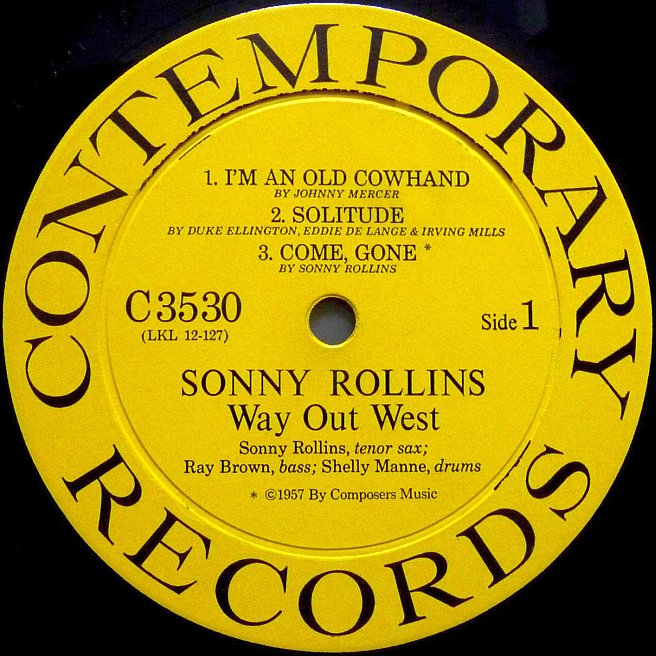 first Contemporary label, mono (1953 - 1958)
The first mono label for the C3500 series. Deep groove and heavy vinyl.
first Contemporary label, mono (1953 - 1958)
The first mono label for the C3500 series. Deep groove and heavy vinyl.
-
1. Label Variation (Stereo)
 first Contemporary label, stereo (1957 - 1958)
Early stereo recordings of Contemporary artists were released by the Stereo Records imprint.
first Contemporary label, stereo (1957 - 1958)
Early stereo recordings of Contemporary artists were released by the Stereo Records imprint.
-
2. Label Variation (I)
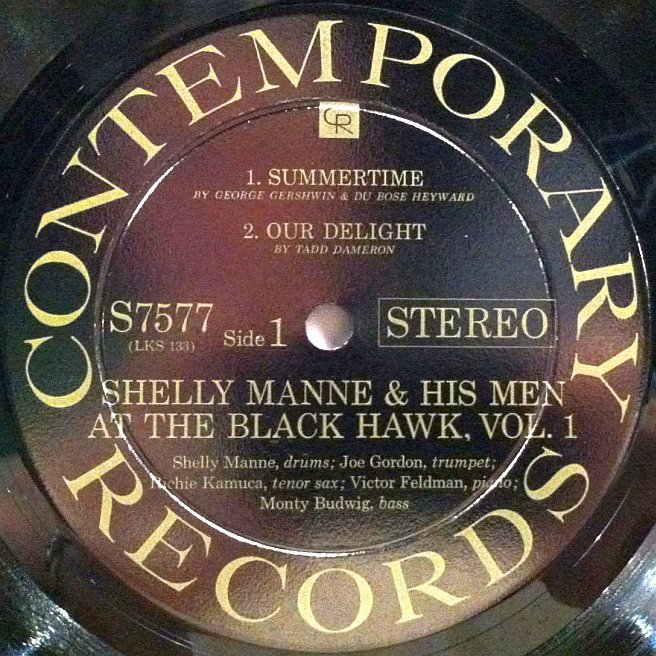 second Contemporary label, stereo (late 1950s)
The black and gold stereo label comes with a small 'CR' logo, first at the top, then the bottom of the inner circle.
second Contemporary label, stereo (late 1950s)
The black and gold stereo label comes with a small 'CR' logo, first at the top, then the bottom of the inner circle.
-
2. Label Variation (II)
 second Contemporary label, stereo (late 1950s)
The black and gold stereo label comes with a small 'CR' logo, first at the top, then the bottom of the inner circle.
second Contemporary label, stereo (late 1950s)
The black and gold stereo label comes with a small 'CR' logo, first at the top, then the bottom of the inner circle.
-
3. Label Variation
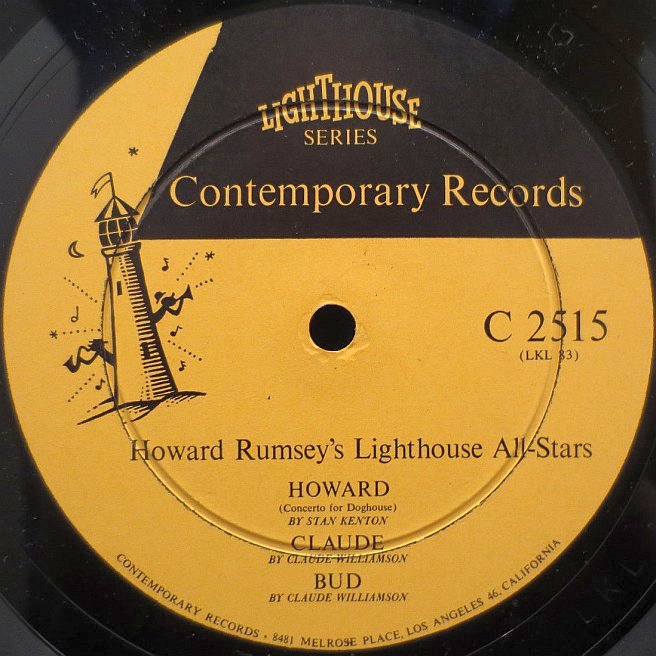 third Contemporary label (late 1950s)<
The label for the Lighthouse series.
third Contemporary label (late 1950s)<
The label for the Lighthouse series.
-
4. Label Variation
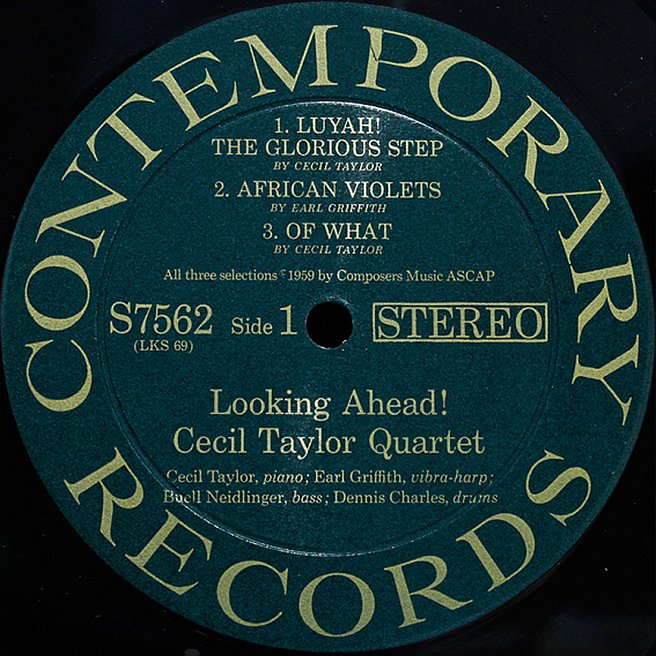 fourth Contemporary label, stereo (early 1960s)
The green and gold stereo label still has a deep groove, but is likely a later pressing than the black stereo label.
fourth Contemporary label, stereo (early 1960s)
The green and gold stereo label still has a deep groove, but is likely a later pressing than the black stereo label.
-
5. Label Variation
 fifth Contemporary label (1960s)
The yellow stereo label with the 'CR' logo was probably used only for reissues of black stereo albums.
fifth Contemporary label (1960s)
The yellow stereo label with the 'CR' logo was probably used only for reissues of black stereo albums.
-
6. Label Variation (Mono)
 sixth Contemporary label, mono (1960s)
The yellow label with the 'CR' sign printed inside the 'O' of 'RECORDS'. Used for both mono and stereo releases.
sixth Contemporary label, mono (1960s)
The yellow label with the 'CR' sign printed inside the 'O' of 'RECORDS'. Used for both mono and stereo releases.
-
6. Label Variation (Stereo)
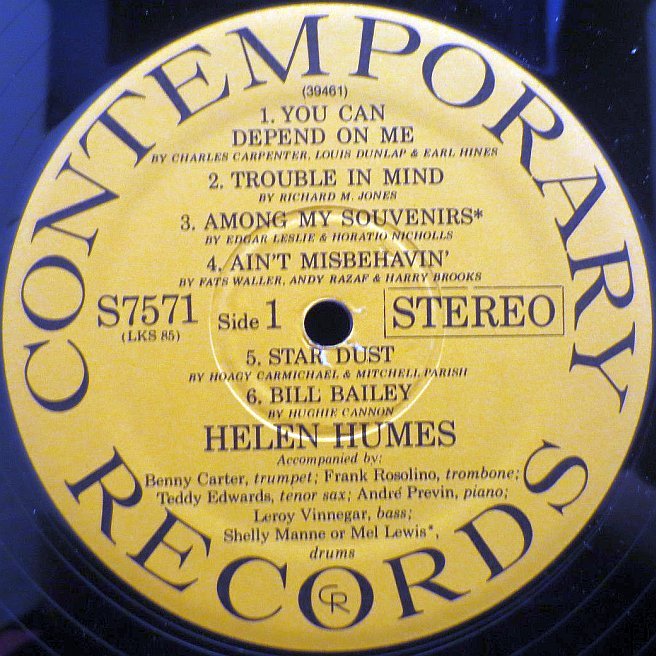 sixth Contemporary label, stereo (1960s)
The yellow label with the 'CR' sign printed inside the 'O' of 'RECORDS'. Used for both mono and stereo releases.
sixth Contemporary label, stereo (1960s)
The yellow label with the 'CR' sign printed inside the 'O' of 'RECORDS'. Used for both mono and stereo releases.
-
7. Label Variation
 seventh Contemporary label, stereo (1960s)
Another 1960s stereo label without the 'CR' logo and also no deep groove.
seventh Contemporary label, stereo (1960s)
Another 1960s stereo label without the 'CR' logo and also no deep groove.
-
8. Label Variation
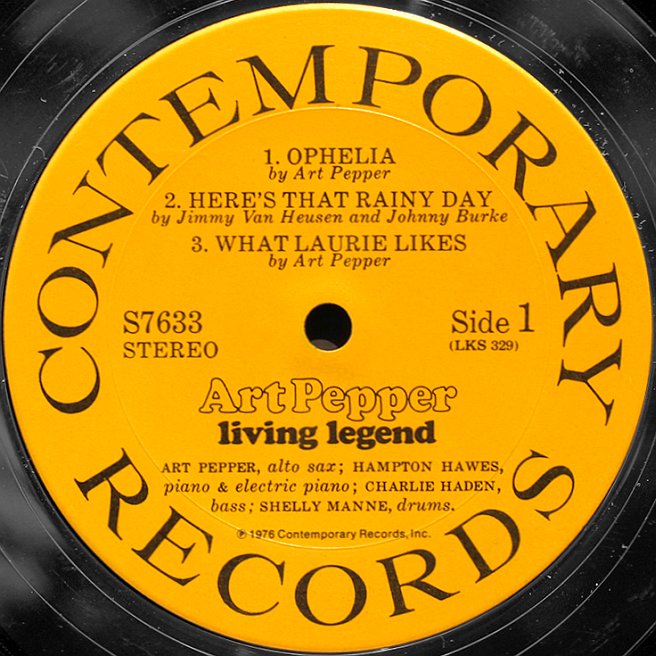 eighth Contemporary label (1970s)
Reissue label (Contemporary Records)
eighth Contemporary label (1970s)
Reissue label (Contemporary Records)
-
9. Label Variation
 ninth Contemporary label (1980s)
Reissue label (Fantasy Inc.)
ninth Contemporary label (1980s)
Reissue label (Fantasy Inc.)
-
1. UK Label Variation (Mono)
 first UK Contemporary label, mono (late 1950s)
The first Contemporary Vogue label for UK mono releases
first UK Contemporary label, mono (late 1950s)
The first Contemporary Vogue label for UK mono releases
-
1. UK Label Variation (Stereo)
 first UK Contemporary label, stereo (early 1960s)
The first Contemporary Vogue label for UK stereo releases
first UK Contemporary label, stereo (early 1960s)
The first Contemporary Vogue label for UK stereo releases
-
2. UK Label Variation
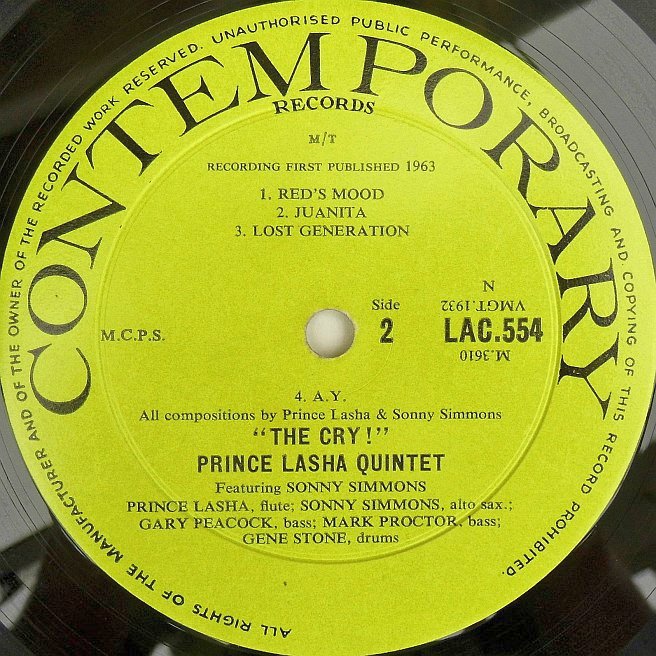 first UK Contemporary label, mono (1960s)
The second UK label without the familiar 'RECORDS' text at the bottom.
first UK Contemporary label, mono (1960s)
The second UK label without the familiar 'RECORDS' text at the bottom.
-
1. Australian Label Variation
 first Australian Contemporary label (1960s)
Contemporary albums were also released internationally. Here an early Australian pressing, made by RCA.
first Australian Contemporary label (1960s)
Contemporary albums were also released internationally. Here an early Australian pressing, made by RCA.